Help your kids create a personal coat of arms with this free printable project. Includes kid-friendly instructions, symbolism ideas, and classroom/homeschool ready examples. (Affiliate links included in this post; I earn from qualifying purchases).
"I am a KNIGHT in shining armor!" my three year old declared. And ever after... so he was. Both the boys have been obsessed with playing knights, fighting dragons, and building castles out of my couch cushions. We even threw a Knight In Shining Armor Birthday Party for him.
Knights of old are certainly exciting to read about and play make believe. Because of this, we have come up with a variety of ways to include knights in our literature, crafts, and homeschooling activities! This theme especially works well with our Classical Conversations Medieval Theme every three years.
However, you don't have to be a Classical Conversations family to enjoy this activity. This coat of arms project is an easy way to build family spirit, whether you're using the free printable below or using one of the activity ideas to create something meaningful for your own homeschool or classroom.
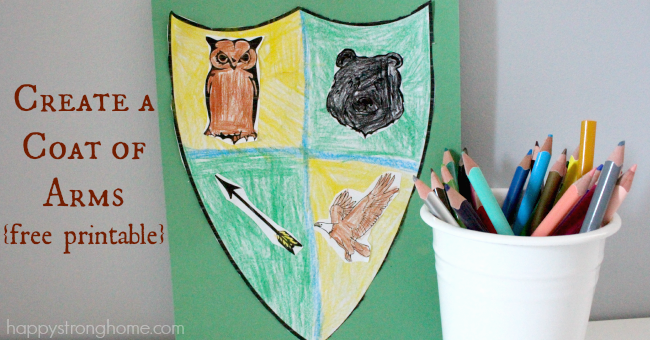
A fun way to get medieval is to have each child create a coat of arms. This activity involves a little cutting, gluing and coloring. Beyond the tactile fun of creating on a theme, this project also offers mental and emotional benefits as your child:
- begins to understand symbolism
- is able to express their personalities
- works on their understanding of self
- thinks about personal and/or family values
Short History of the Coat of Arms
A Coat of Arms was the image, icon, or "herald" of each family back in medieval times. Families would choose symbols and colors that held certain meanings for their history and reputation, and these would appear on their clothing, banners, shields, crests, and other important objects.
Colors were important and could reveal whether you were royalty, or in the military.
The shapes, stripes, chevrons all had meanings too, but that was a bit too detailed for my little boys at the preschool age, so we stuck with colors and symbols.
For older students you may be interested in buying this book for expanding your knowledge. It was a fantastic tool for my boys when we revisited this activity in their older years. Highly recommend 5 out of 5! In addition, this website on English Heritage gives a great breakdown on colors and symbols as well as the shapes.
Literature and the Coat of Arms Project
Of course, I always recommend starting with a good book when doing a history related project! You can check out my medieval history book list and pick out a few of the titles that match your children's ages.
When we first did this activity my children weren't quite ready for writing projects, so instead we discussed what we had learned, and I also read out loud to them as they worked on their projects. If your children are old enough to add writing to their project, some ways you can prepare them for the coat of arms projects would be to:
- Write and describe what a coat of arms would look like for a fictional or historical character
- Tie coat of arms symbols to the central themes of a story
- Choose coat of arms symbols and colors to inspire a poem about a brave knight or a fearless deed
- Choose symbols and colors at random and build a story around the character who uses that coat of arms
- and more...!
How to Create a Coat of Arms
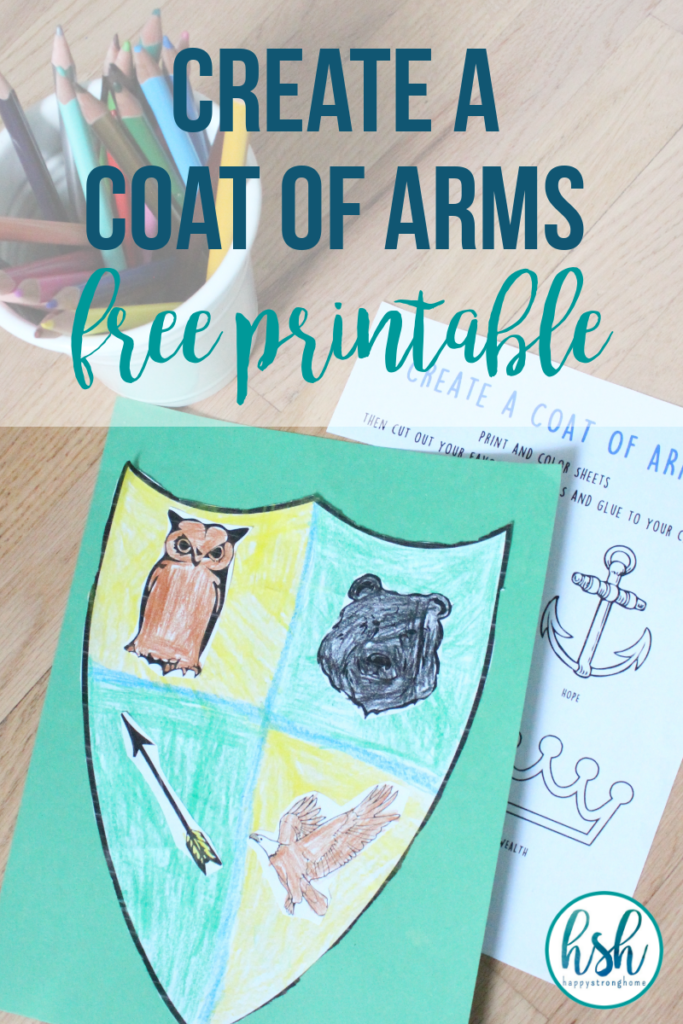
Once we covered some of the historical background and stories, I created a printable with twelve symbols that I thought would hold strong meanings for kids, like: bear, fox, eagle, lion, heart.
First, we discussed the symbolic meaning of each symbol. Even though the boys were three and five, they could easily grasp that a bear meant "strength" or "fierce." I expanded on some of the symbols a little bit as long as they were interested.
We also discussed the different meaning of the colors. This website goes into detail about what each color can mean. For younger students you may want to stick to basic primary level colors, whereas older students can dive into the different hues.
Then the boys selected four different symbols they thought fit their personality, and a favorite shield (or crest) shape, and cut these out. After coloring each symbol. we colored the background of the shield, then glued the symbols down in each corner.
My son chose the owl for wisdom, the arrow for protection, the bear for fierceness, and the eagle for strength. He colored his shield green, blue, and gold (hope, loyalty, generosity).
Then we mounted the shield onto a larger piece of construction paper. Voila! Coat of Arms! You could also glue it onto cardboard if you want to make it a bit stronger.

For Older Kids:
While this coat of arms project was initially designed with smaller kids in mind, it can certainly be expanded to include older kids as well. For them, include some of the literary ideas listed above, as well as the following:
- Create a coat of arms that is personally symbolic (basically what we did above, but with deeper meaning, spending more time on the symbols and how they work. Are they symbols of who they are now, or who they want to be?)
- A study into symbolism and how symbols have been used throughout time to represent ideas. While this covers medieval symbols, what symbols from the present could be used and how would the student apply them? What symbols do we use now in our lives?
- Compare and contrast. Look at the different coat of arms and write a short-form paper on how they are the same or different and what they represent.
- If your family has European heritage, you might have a historical family crest already. Search this website and find out. If you find one, how does your family crest compare to your personal crest? If you family isn't on there, find an ancient crest and research what you can about the family and the symbolism on the ancient crest.
Creating a coat of arms can be a simple or complicated project. You could let your kids color while you read them some medieval books or use what you learn to inspire your coat of arms. It doesn't have to be done in any specific order.
A Knightly Quest - Extending the Learning

In our reading of knights and castles and days of yore, my boys were enchanted by knights on horseback and their shining armor. But more so, they were amazed by knightly deeds of valor like fighting dragons and rescuing princesses.
I realized my little boys' interest in knightly deeds was a great opportunity to teach them about manners and character! So, we extended the connection from the symbolic meaning on our crests to real-life action. First we discussed:
- What does it mean to be strong?
- When might you have to be strong?
- What is generosity?
- Who can you show generosity towards?
Once the kids understand the meanings, we embarked on a knightly quest for good deeds!
For our ongoing quest, we used a checklist of Knightly Good Deeds (included in the printable!)

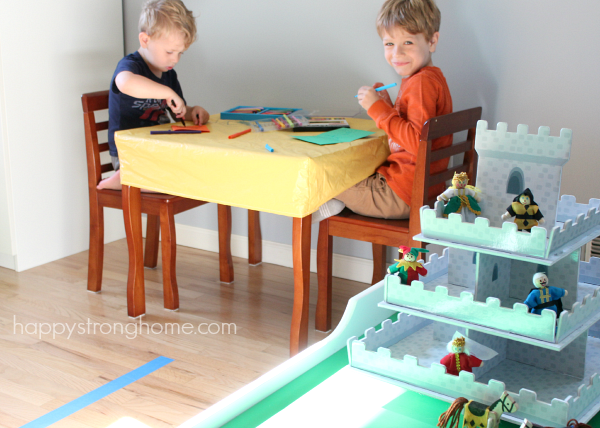
We played with palace puppets and talked about how knights helped people during medieval times. The boys play-acted a few scenes about helping others using wooden play figures.
We talked about how they could be brave, strong, and true like knights of old. And how finding ways to serve others is a quest we can go on every day, looking for opportunities to help others.
Knights in stories are often found fighting dragons, jousting tournaments, serving. Together, we translated these ancient brave deeds into modern tasks my boys could accomplish. For older students, maybe they won't want to play act the stories, but this comparison between the great deeds of old and the kindly acts we do now can still work!
Our Knightly Good Deeds List
Kids of any age can learn to be chivalrous and show generosity through good deeds towards others. A historical topic like knights in shining armor adds high-interest value to your discussions and activities.
I used question prompts like
- "What would make someone smile or laugh?"
- "What could you do to show you are a good friend?"
- "If someone was sad, what would you do to help?"
It was eye-opening coming up with ideas together. They had unique ideas for giving like handing out balloons and stickers! Or giving hugs!
We spent the week after my son's birthday party on a quest to complete as many of these "knightly deeds" as we could. The boys helped out around the house, created thank you cards for their swim instructors, delivered flowers to their Grandma, and learned how exciting it is to make someone else smile! (Plus, any time you can put a Knight costume on, that just adds to the delight!).
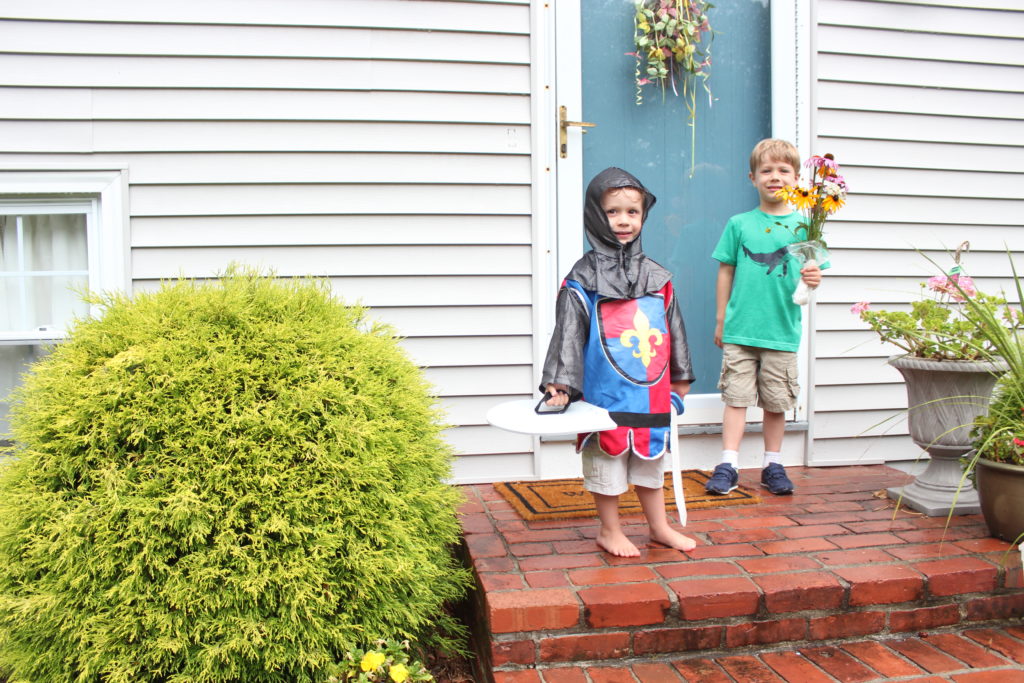
It's never too early to teach children to be brave, strong, kind, and true. Building off a child's interest to help them help others makes helping out memorable and exciting for little ones.
Use our list, or create your own list of kindness deeds together, then go on a quest to do each one, maybe one each day or each week!
I always think it's great when kids can connect history learning with real-life outreach activity!
Grab your FREE Coat of Arms Printable!
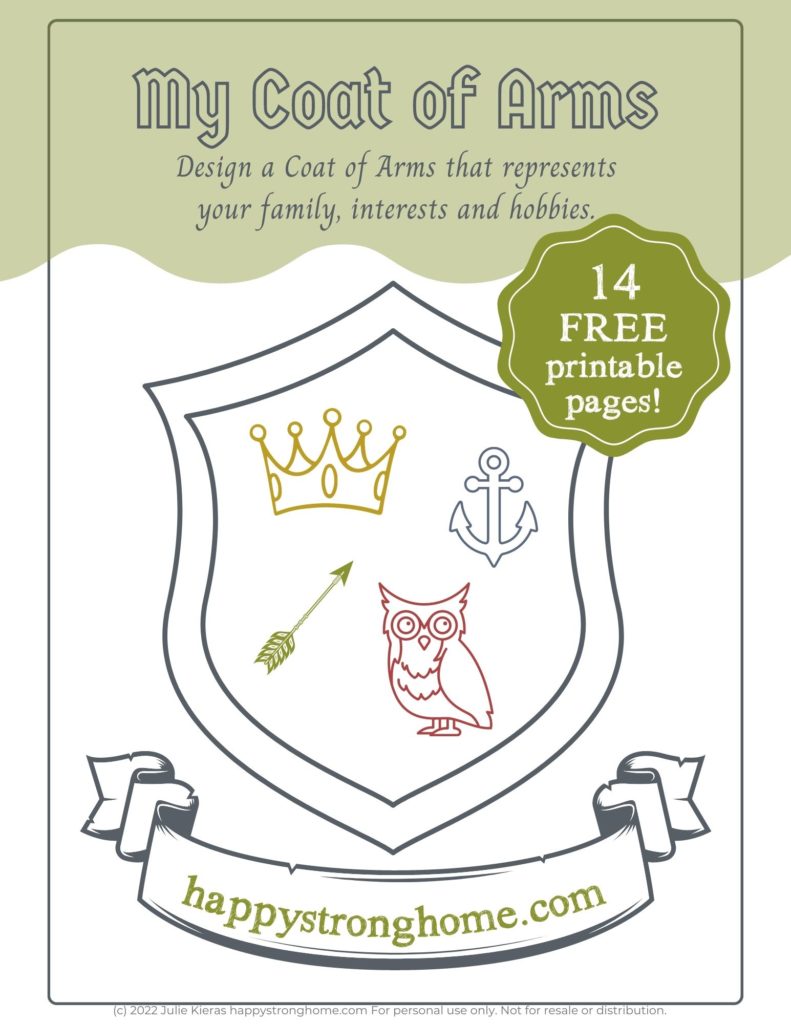
Our coat of arms project turned into a wonderful hands-on learning experience. Get this FREE Printable packet to do this same activity with your kiddos!
Since writing this original post, I have UPDATED the printable. So it looks a little different than in the photos, but still works! PLUS it includes more pages. Included in the printable is:
- 6 shield patterns
- 12 symbols
- Key to Symbols & Colors
- 1 Knightly Good Deeds List
- 1 Tracing Picture
- 3 Coloring pages
FILL OUT THE FORM to get instant access to your file - it will be delivered to your email, so check your spam filter.
Tell me your ideas for more knightly good deeds! When have you connected history to real life for your kids? I'd love to hear your ideas!
PIN THIS activity to your homeschool or education boards to save for later!

I'm not sure which form to fill out, is it this one?