One of the hardest parts of writing, or teaching writing, is knowing what to write about. I want to show you how to capture life moments using timelines, so you, or your kids, never miss another writing idea!
Perhaps this is something you already do. It's something so easy I often forget what a great writing strategy it can be!
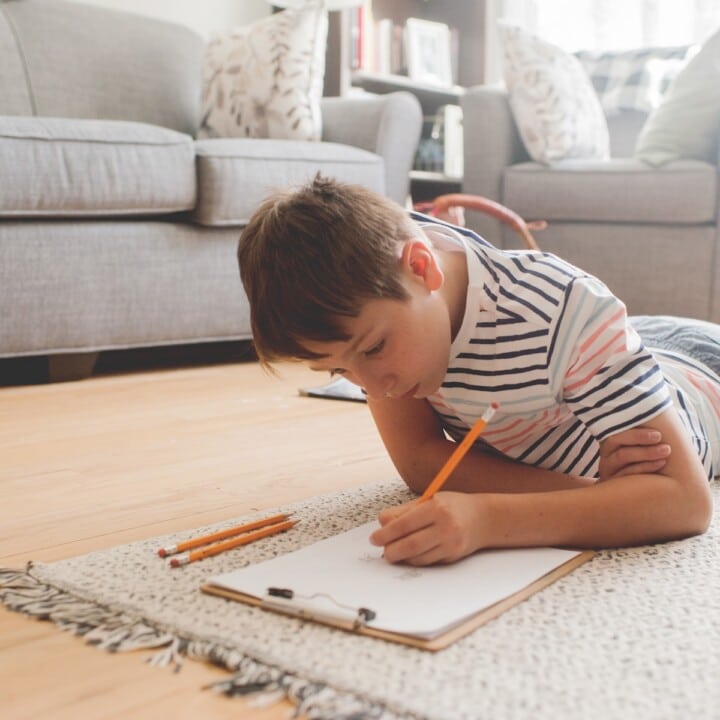
Timelines allow us to jot down small moments quickly. Simply set aside a section of your writer's notebook just for timelines. I used four pages to capture the past five years and will start a new ongoing section for this year. If your child is lost for writing ideas, use a smaller or more specific time frame.
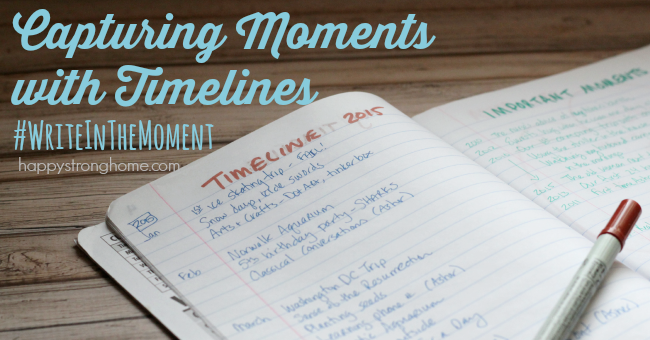
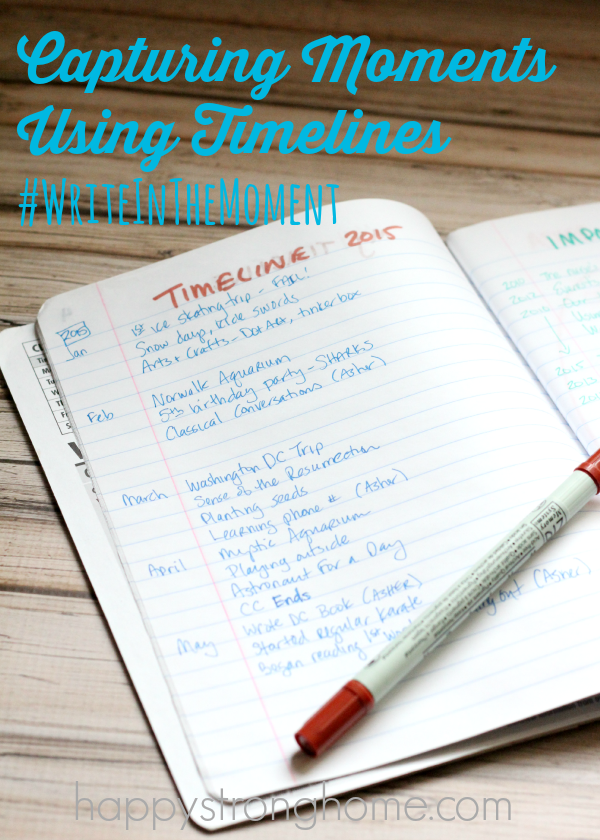
Creating a Timeline: A Child's Year
- January -
- 1st ice skating trip -
- Snow day and ice swords
- Winter Arts & Crafts - dot art card making & tinker box
- Giving up the binky (little ones can create timelines too! You'll just need to write down as they narrate!).
- February
- Norwalk Aquarium birthday present
- Birthday Shark Party
- March
- April
- Mystic Aquarium - sharks, dino dig, rainy penguin walk
- Playing outside - bikes and big wheels, dandelion rubs
- Astronaut for a Day
- May
- Started karate
- Read a new favorite book
See how I did that? It's so simple. You can model this thinking while teaching your children. Use social media, photo albums, journal entries, calendars, or just your memory to think of the things you have done, either as a family or individually. Pulling out photo albums (on your phone or printed) with your kids can jog their memory of things they have done.
Tips for Gathering Past Timeline Ideas
- Go through folders of photos from each month. This surfaces memories and keeps your timeline well-organized
- Look at your Facebook and Instagram feeds! What a rich idea spot because you probably already took a photo or jotted a memory down! And they're already in order!
- Skim report cards, that stack of memos/notes on the counter, or past writing assignments to spark memories.
- Review holidays and holiday traditions
- Sometimes I even look at my calendar to remind myself what happened in the last month!
When to Start Your Timeline
When you sit down to write, you could start with the most recent events, or start from your earliest memories. Either process works.
Now, whatever beginning you've decided to go with, the beginning of the year, the beginning of the school year, a birthday, or your first memory… write that down. It's your start.
Leave spaces once in a while just in case you remember more events later and can fit them in! Creating timelines allows us to gather small moment ideas on a daily basis.
If you don't want to go back to the beginning, you can also start by writing down events from this week, or even earlier today, and use your writer's notebook to jot notes about things as they happen… someone tells a funny story, you go someplace new, you make a new friend… anything works.
Turning Timelines into Stories
Listing out these ideas gives me at LEAST 20 new writing ideas! Some of them I already wrote about (see links). However, I wrote from an adult perspective. Those posts turned out as reflections, how-tos, listicles. I could rewrite those same stories in a narrative form, using my children's point of view. When children write their stories, they often write from their perspective in the first person, or "I" voice.
Now, help your child choose just one of their special moments and turn it into a piece of writing. Some options include writing a narrative like you are telling the experience to someone who wasn't there. Or use it as a reference for a poem. Another idea is to fictionalize the event. What do you wish happened? What if there had been dragons or fantasy elements? You never know where you can go with a story.
Educational Benefits of Writing with Timelines
Writing timelines isn't just a fun writing activity. It has benefits that cross into a variety of language arts skills.
Sequencing: Timelines most obviously help with sequencing. By writing timelines you put events in order, see choices and consequences, and can define what happens next. Sequencing helps children and teenage writers to understand the order of events.
Brainstorming: Sometimes brainstorming ideas from scratch can be difficult, especially for beginner writers. Using timelines allows us to brainstorm with real events and real stories from our past.
Organizing: Young writers can struggle with knowing what to put where in their story. Using timelines is another form of outlining. When outlining, we decide what pieces of information go where in the writing assignment. Timelines create a similar experience and can lead to a better understanding of using outlines.
Emotional Processing: While not something that can be generally measured educationally, writing personal timelines can give young students the opportunity to find their voice, process their life and experiences and reflect on those aspects of their lives. While journaling can often help students (and anyone else) process current events, using timelines allows your child to travel back to the past and process events with some separation, a new perspective, or a with more clarity.
When children see how their timelines turn into writing ideas, they will never fear the blank page. There is always something to write about!
I suggest you and your child keep your notebook handy, and at the end of each day or week (or month), jot down important moments into an ongoing timeline!
If you're working on your writing with me, share a photo of your timeline on my Facebook page!! I'd love to see your work!
Other Writing Resources for Homeschoolers and Beginning Writers:
- Why Strong Readers Become Strong Writers
- Benefits of a digital writer's notebook
- Gathering Ideas with Lists
- Comic Stones Story Craft
- A Tale of Two Lion Loveys - a writing piece based on an entry in my writer's notebook!