An encouraging guide to teaching writing at home for parents of elementary and middle school aged students
Parents who are schooling at home often tell me they feel overwhelmed by the idea of teaching writing. Unlike the sciences or math, writing can feel more subjective. It's not always clear what counts as "good writing." Is it spelling? Punctuation? Essay organization? Then, there are so many methods and opinions. When should kids start writing? What should they write? No wonder parents are unsure where to begin. What may have been easy in the beginning (writing letters and simple sentences) can get more complicated as your child ages.
As a homeschool mom of 10+ years, a former English teacher, and writing tutor, I have learned that parents don't need to be afraid of this stage of school. Writing is a skill you can teach. This page isn't about a specific curriculum (although there are plenty of those around!) but a process for making writing approachable. Keep reading for a step-by-step framework as well as resources to help your child grow as a confident writer with you as a confident guide.

Let's Demystify the Writing Process
There is a clear framework of writing. Some call it "the writing process," others "Rhetoric." I think of it as building a house. A house isn't actually built floor by floor, but layer by layer. After the foundation is laid, a house is framed, wired, insulated, and then finished.
During the building process, workers go over the structure multiple times, using different skills. Writing is similar: children revisit ideas while using multiple skills.
- Thinking means learning to notice, define, question, compare and decide. We're teaching kids to look at an idea from multiple angles before they begin to write.
- Organizing involves learning to group ideas, choose an order for those ideas, and stick to a main point.
- Drafting asks writers to craft clear sentences, use specific word choice, and avoid distraction.
- Revising calls on writers to add detail, clarify meaning, strengthen their message.
Although we can name these four stages of the writing process, writing is not linear. Instead, it's integrated. For example, a child isn't simply "done thinking" before they begin drafting. They are thinking, organizing, recalling at the same time. This is why it feels messy. This is why writing can lead to meltdowns.
Writers struggle not because they aren't trying hard enough. They struggle when a core skill is missing or underdeveloped.
At home, you can lead your child through each stage by giving short, daily writing exercises that let them practice distinct writing skills.
These skills are not random. They come from the classical method that has trained strong thinkers and communicators for centuries. What worked then, still works.

Teaching Writing at Home: A Simple Progression by Stage
Because writing is skills-dependent, instead of focusing on strict grade levels, we should look at the best age (or stage) for developing these skills.
- Early writers need sentence clarity and narration.
- Developing writers practice paragraph structure and summarization.
- Maturing writers master multi-paragraph structure and argumentation.
Staying skills-based means writers don't struggle to keep up, and they aren't held back either.
Teaching writing at home means you offer opportunities to narrate stories, write short summaries, and practice verbalizing clear arguments.
What Parents Can Stop Worrying About
Here are three areas parents and their students can get stuck. I'm giving you permission to stop worrying about them.
- Over-polishing. Students need practice, not perfection. Polishing will come naturally the more students write.
- Complexity. Simplicity allows the writer to gain confidence in their skills. Allow content to develop as the student matures.
- Length. Skills are practiced via volume, not word count.
In your home, students should write many short pieces weekly versus a few long, drawn out large projects. This keeps assignments manageable and allows for many repetitions of skills.
Here are a few examples of some short form writing activities:
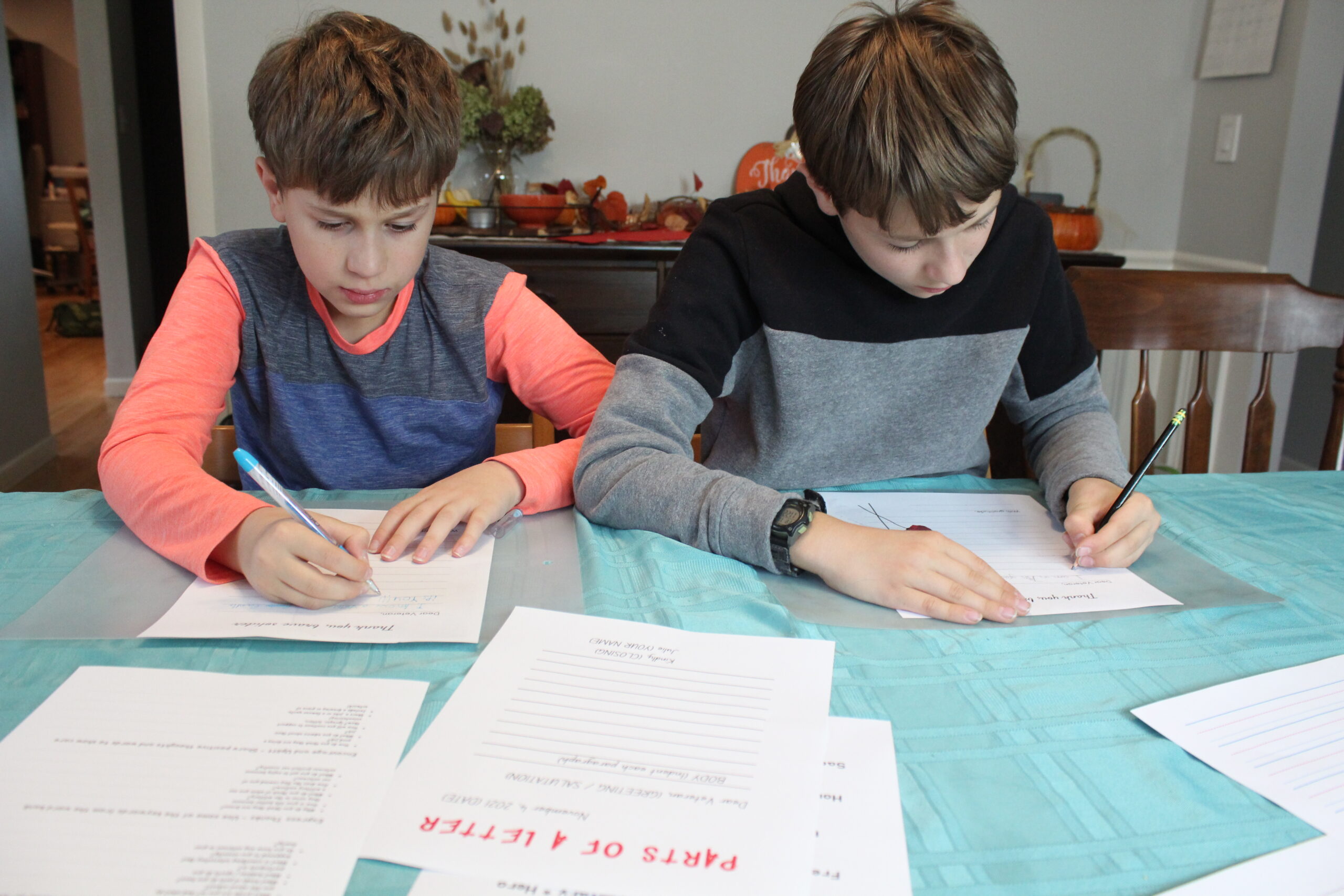
- Veterans Day Letter Writing
- Holiday Letter Writing Templates for Kids
- New Year's Goals for Kids
- Conversation Hearts Printable
- Kid Friendly Writing Ideas for Write a Friend Month
- Using Story Stones
Creating a Writing Routine in Your Home
Here's a gentler routine to focus on when teaching writing at home:
- Grow one skill at a time.
- Practice daily. Consistency matters.
- Talk before writing. Retelling ideas aloud lets writers "try out" an idea before committing.
- Read good books. These build the brain inventory and form mental patterns of good structure.
Allow growth to compound. Just like interest in a bank. Deposit many small pieces of good writing, and the good writing will grow exponentially!
What Strong Writing Does to Your Brain
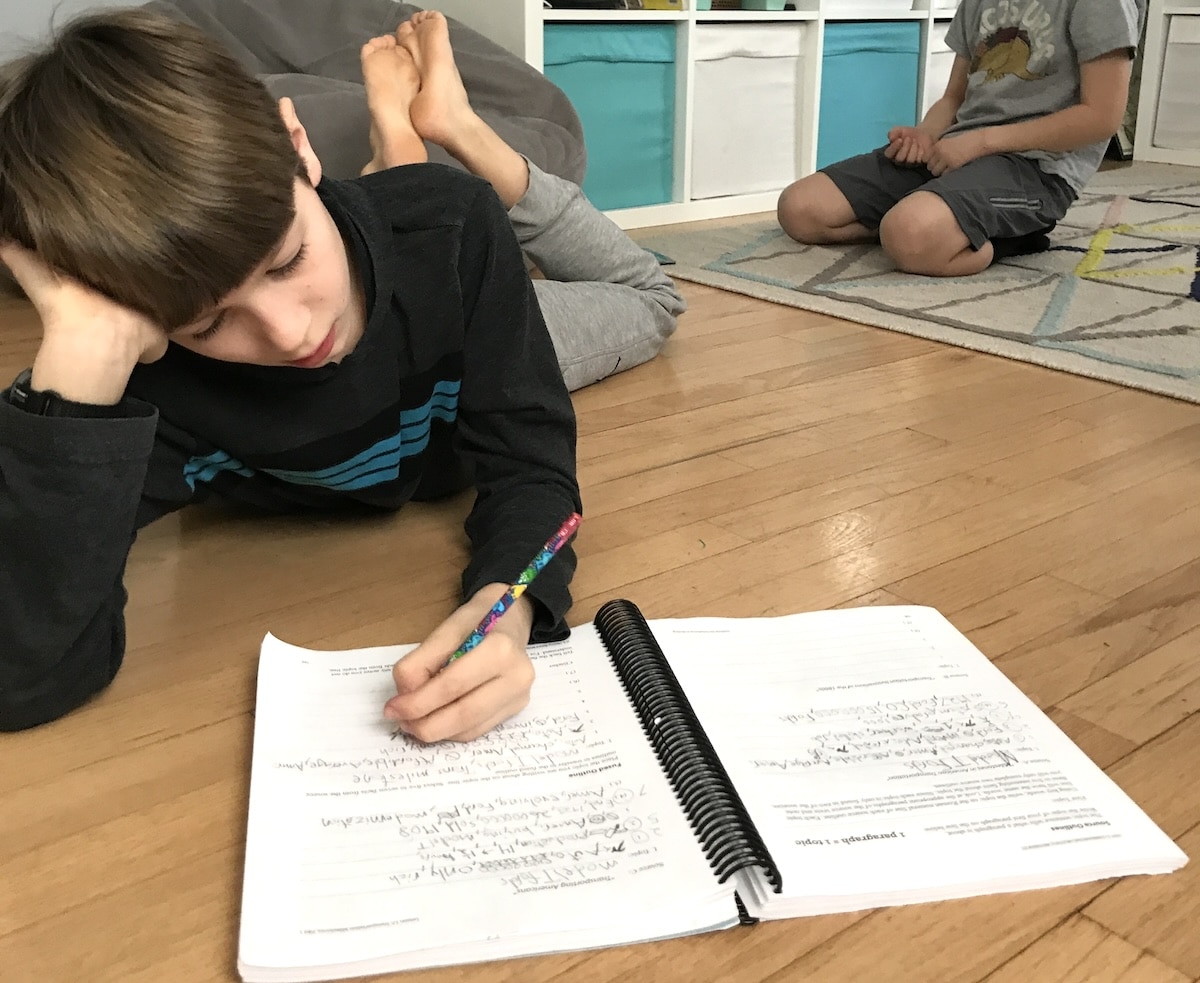
If writing feels hard, you aren't imagining it! Writing uses multiple skills at the same time and engages both the brain and the body! When we understand how hard the brain works when writing, we can empathize with our students-and focus on a clear, supportive plan.
Writing challenges multiple brain systems. Here's just a peek at the brain systems at work when your child is writing:
- Long term memory recalls facts, vocab, and experiences
- Working memory holds ideas
- Habit memory creates spelling and grammar structures
- Spatial and motor memory allow for handwriting or typing drafts
- Executive function manages planning and organizing
Phew! It feels like a lot, because it is. No wonder kids (and their parents) get frustrated and cranky trying to teach writing.
This helps us understand why kids with a big vocabulary struggle to write. Or why students with excellent speaking skills can "freeze" on paper.
Writing is not a sub-skill, or creative side-quest. It's actually brain training!
But you don't need a PhD in brain science to guide your child's writing step-by-step at home. Knowing that writing involves so many brain systems just helps us get clear on what a child really needs to grow into good writers.
What Else?
Now, you probably have a lot more questions for your specific writer. Maybe you've identified the skill your child could strengthen. Maybe your writer is resistant. Or, maybe you just want a little more support. I'm here to help with all of that! What's your next question?
- How often should my child write?
- Should I correct every mistake?
- What if my child hates writing?
- Do I need a curriculum? (If so, which one?!)
Explore the links on this page to get a better idea of how you can help your child not only be a good writer, but someone who enjoys writing. Got a different question? Email me!
Strong writers grow with practice, one page at a time and one thought at a time I call it the try-it loop: children learn by trying, noticing what works, adjusting, and trying again. Keep reading with your child, ask questions, and give them space to explore ideas.
Also, check out our post on how being a strong reader can contribute to strong writing skills!
Frequently Asked Questions About Teaching Writing at Home
Homeschool parents teach writing at home by teaching skills that help students write step by step. Instead of expecting perfect essays every time, parents guide students through the writing process multiple times. Students will generate ideas, organize thoughts, draft sentences and paragraphs, and revise their work. This regular practice coupled with clear structure, makes writing more manageable for both parents and students.
The best writing process that helps students makes sure to break writing down into manageable steps. While every curriculum will differ, most writing process instruction moves through these steps: generating ideas, organizing them into an outline, drafting sentences and paragraphs, then revising for clarity. Teaching the writing process gives students a skills-based framework they can use over and over as they grow.
Writing is one of the most complex academic skills children learn. It requires vocabulary, sentence structure, organization, critical thinking, as well as hand-eye motor ability. Because writing pulls together so many skills at once, students often struggle unless parents teach writing step by step and provide opportunities for consistent practice.
Strong writers almost always grow from strong readers. Reading exposes students to vocabulary, sentence patterns, and well-organized ideas that they can draw from in their own writing. For families teaching writing in homeschooling, strong reading habits are one of the most effective ways to help students develop better writing skills.